Scroll down to read project

Scroll down to read project

Scroll down to read project
Scroll down to read project
SQUARE - CASE STUDY
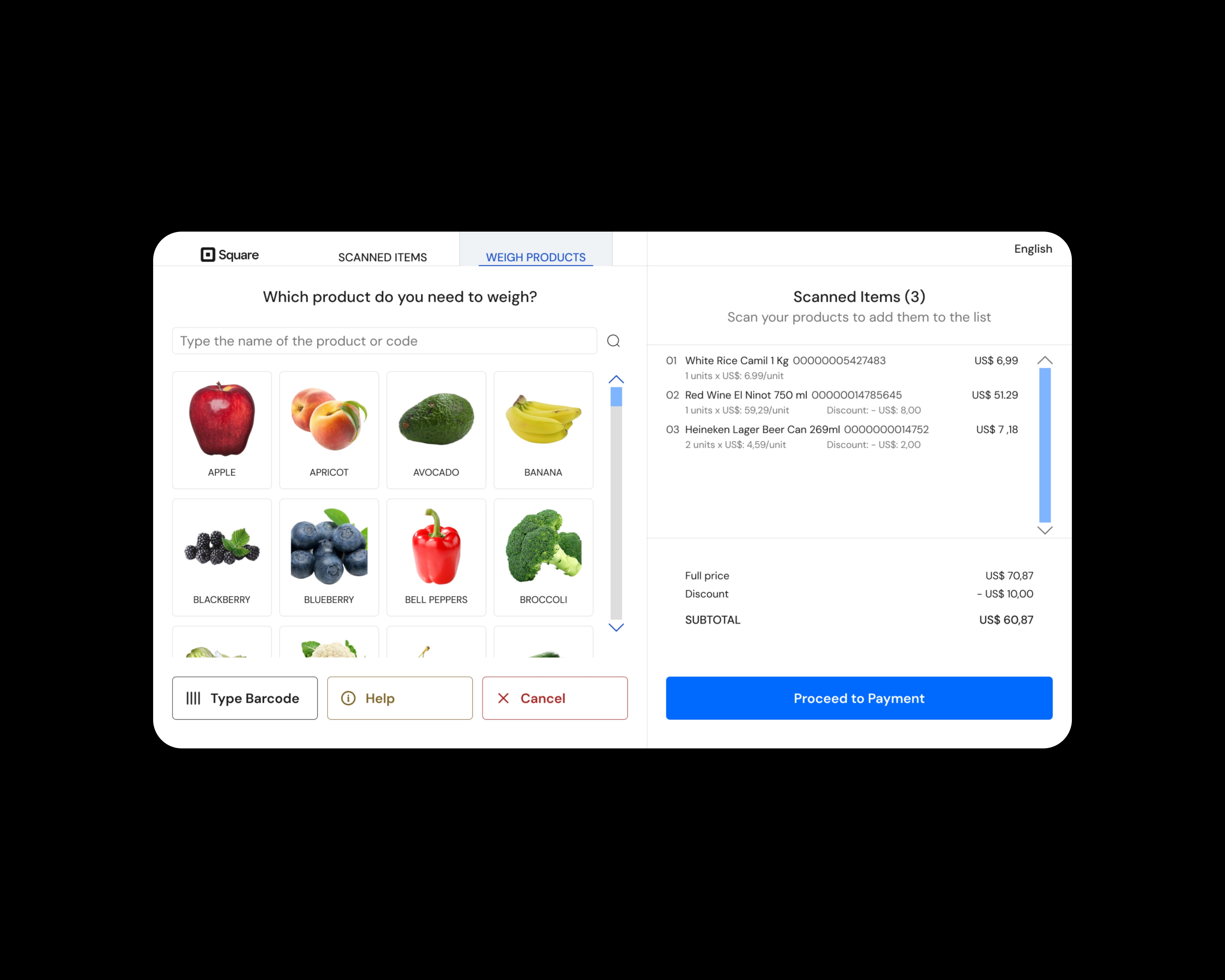
Offering self-service checkout to transform the fast sales flow.
Project type: Tablet; self-service checkout totem Role: Product Designer (solo work) Company studied: Square Applied techniques: Desk Research, Business Canvas, Competitor’s Analysis, Survey, User Interview, Jobs to be Done, Usability Testing, Service Blueprint, MoSCoW and Dot Votiong Priorization, Task Flow, Crazy 8’s, Heuristics Evaluation, Wireframing, Prototyping Project brief: Evolve Square’s payment terminal, Square Register, into a self-service checkout solution Project Overview: To attend to the business’ need of expanding their catalog of products to include a self-service checkout solution, I carried out research online and with users to understand the problem deeply. A solution for an iPad screen was then created, tested and improved. This is a personal project, for study purposes only. I do not have any connections with the company mentioned.

Supermercado Guanabara. Photo by Márcio Alves / Agência O Globo
problem validation
Does this brief make sense?
The project brief mentioned that Square, a financial tech multinational, desired to add a new product to their catalog: a self-service checkout solution. But was it really going to address the company’s and the users’ needs? I wasn't sure, as I didn't know much about the market then. An online research was enough to find reasons to continue with the project, both from business’ and users’ perspectives.
60%
of 1000 American consumers report an increase of usage of self-service checkout in 2021 (Raydiant)
6-12%
of productivity increase reported in stores that have implemented self-checkout (McKinsey & Company)
11%
of expansion of the self-service sector until 2027, reaching US$ 6,5 billion (Global Market Report)
hypothesis
Users hate waiting, so a frictionless solution would offer the most value to them - and to the business
hypothesis
Users hate waiting, so a frictionless solution would offer the most value to them - and to the business
research
What do the users say and do?
After validating the problem, it was time to hear from users. I wanted to understand their pain points and find ways to make a profitable product that also offered an unique value. After sending surveys to 14 people and interviewing 5 people, I was able to find some information on users needs. However, that wasn’t enough to make decisions. Because of that, I also observed 3 people from different age groups and background with self-checkout to learn how they interact with self-checkout devices. One of them used it for the first time ever. Observation: the product doesn’t exist yet, so I had to take the users to a nearby supermarket to use a competitor’s solution
What did I want to learn with the users?
what really makes users choose or avoid self-checkout solutions;
which problems users face and how they are solved;
what their shopping habits are like;
what users really do, not just what they say they do.
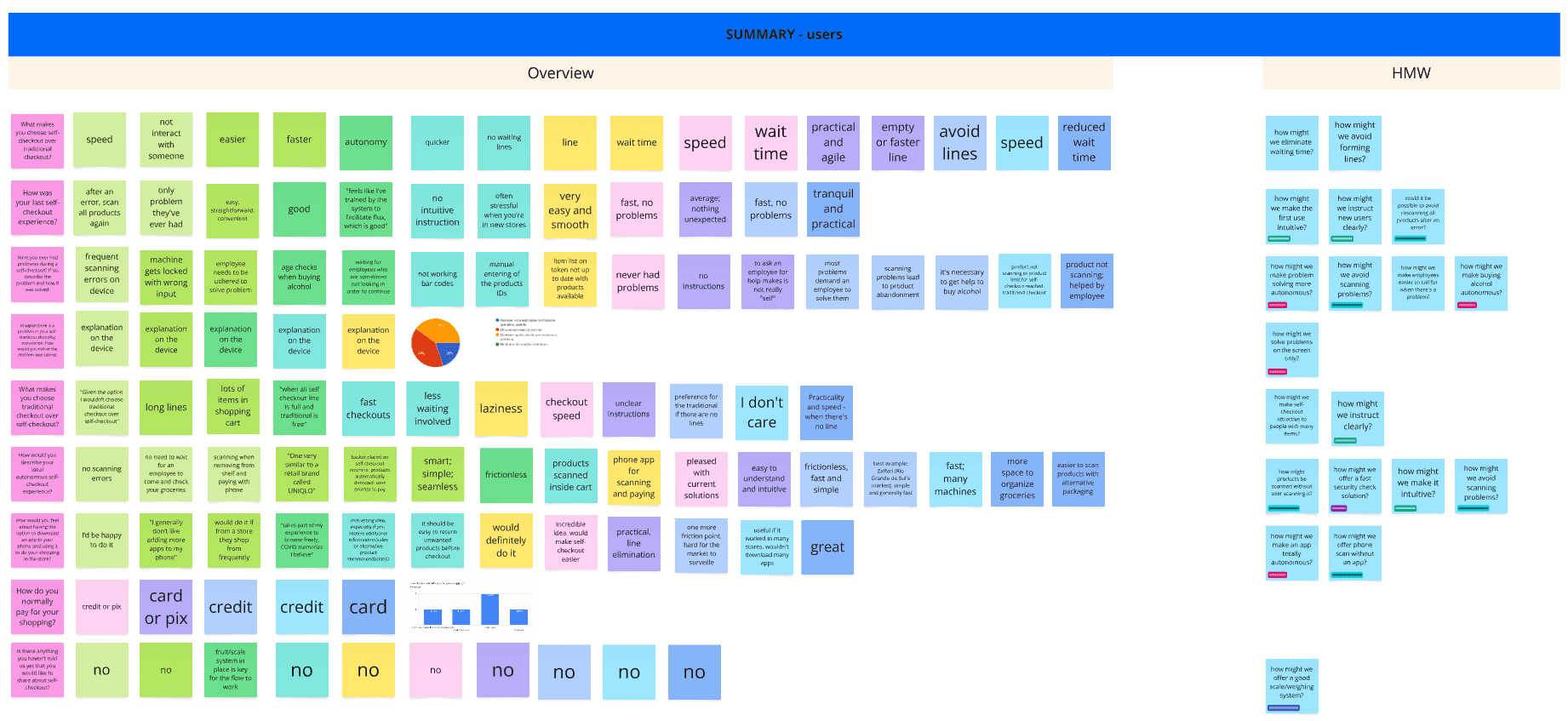
Screenshot from my Miro board, with summary of the results from the surveys. (Link to Miro at the end of the case)
6/10
of surveyed users choose self-service checkout due to agility and a reduced waiting time
2/5
of interviewed users change their mind about which products they are going to buy while shopping
3/5
of interviewed users use a shopping cart, 1 of them holds the items or puts them in a bag: 1 user uses a basket
challenge
How to make a product that is good for most costumers, when they have shopping habits that are so diverse?
challenge
How to make a product that is good for most costumers, when they have shopping habits that are so diverse?
summarizing Research/Takeaways
What could I learn from the users?
Users don’t read instruction on screen
Takeaway: I should make the screen direct and every information that is important should be highlighted in one way or the other, to grab user’s attention
Users have different shopping habits
Takeaway: Making a solution that is focused on one kind of shopping habit (e.g. shopping basket based) would be too restrictive
Users find pop ups confusing and suspicious
Takeaway: I shouldn’t add unnecessary pop ups, especially not as a first interaction, when users just want to buy their products as quickly and frictionless as possible
Users sometimes need to wait A LOT until an employee comes and solves their problem
Takeaway: There should be a way to offer an autonomous solution of problems
imagining the product
Creating a product that makes sense
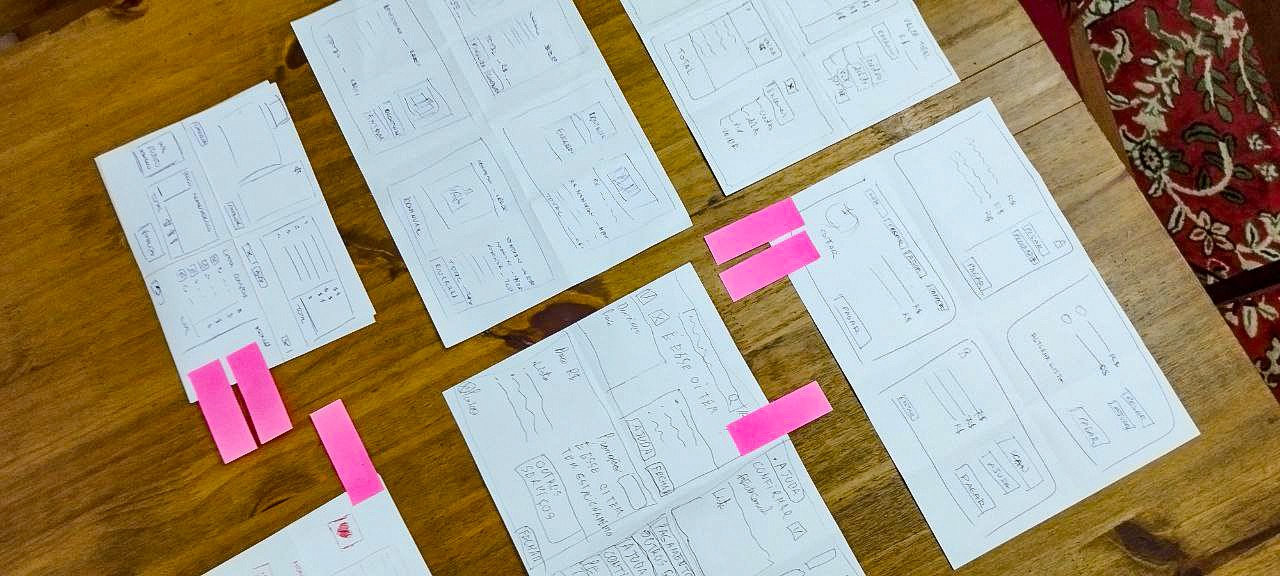
Now that I already understood in depth the market and user's needs, it was time to start making decisions. I imagined the whole flow, taking into consideration the information I had gathered. I prioritized what was necessary for the MVP. Great! And now what? Designing the screen could have been done immediately, but I made sure to include the users in the process to create a product that makes sense to them. To do so, I asked 5 users to draw some ideas for the scanning screen with me and then vote on their favorites and share their reasons for it.
Most voted on Crazy 8's:
recently scanned product highlighted;
option to remove product next to it;
direct and minimalistic screens.
usability testing
Testing the product
Using the votes from users in the Crazy 8'technique and using Square's products as reference, I was able to design a product that I believed users would like. But could they use it? To find out, 5 users tested the solution on a touchscreen laptop, to try to simulate what it would feel like to use the product.
Which scenarios did I want to test?
You are buying things at a supermarket at a self-checkout service. Scan your items and pay for your purchase
You need to buy some bananas and weigh them. What do you do?
What would you do if you wanted to: a) buy multiple items of the same product b) get help from an employee c) scan a product that scanner didn't recognize
100%
of tested users reported that the flow is easy and didn’t have any problems with the happy path
1min50s
was the maximum amount of time it took for users to complete the flow - scanning, buying alcohol and paying
5
was the minimum amount of touches until the happy path was completed (one fewer than the competitor’s)
No one tried to use “edit list” button
Change: remove button
User took too long to find “solve problem”
Change: button color; add icon; change text
User took too long to find “weigh products" tab
Change: make the tabs easier to see
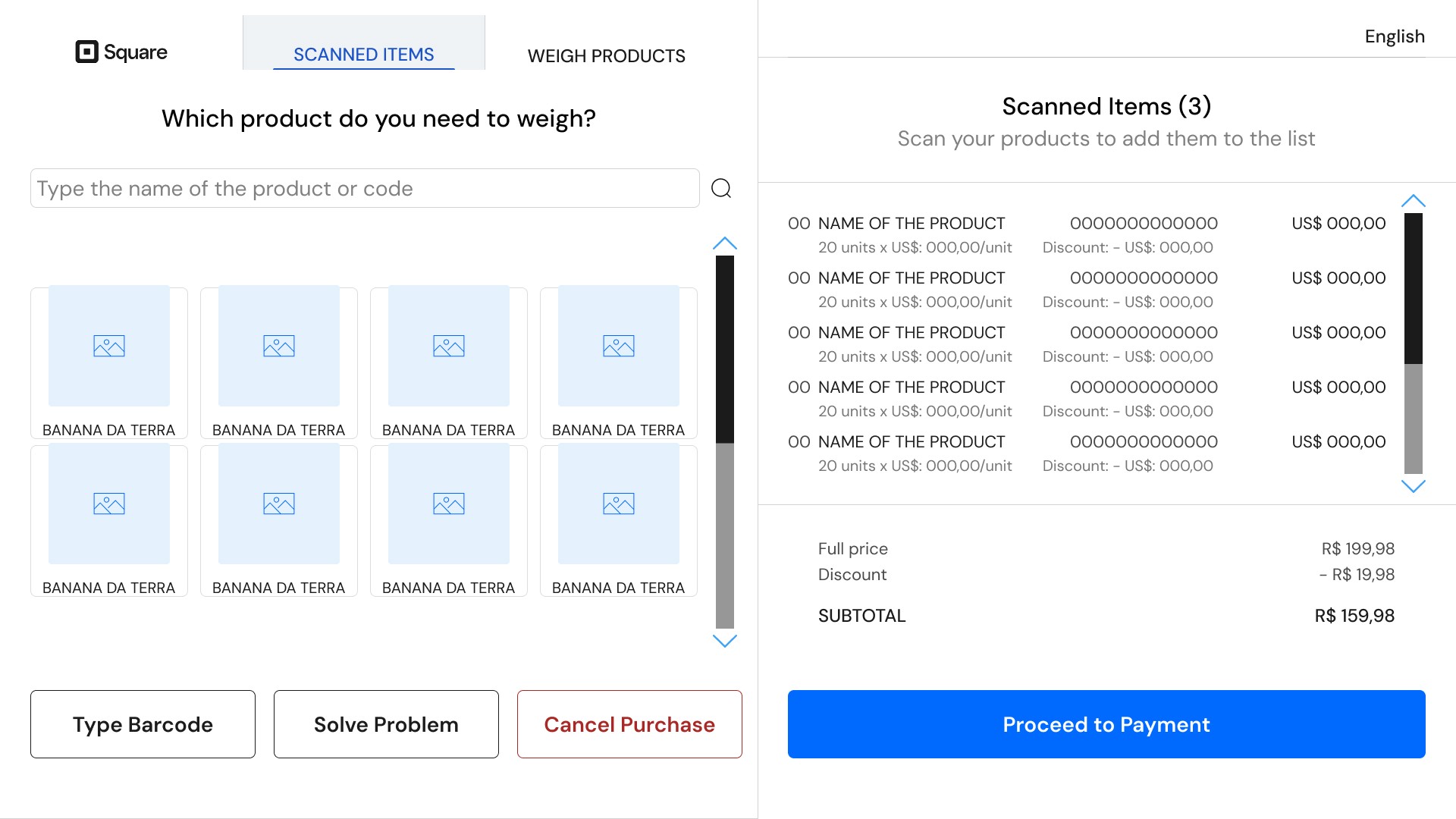
Wireframe used in tests
value proposal
A fast and completely autonomous self-service checkout solution
value proposal
A fast and completely autonomous self-service checkout solution
Happy path: a flow with as little friction as possible, to offer a fast solution.
Happy path: a flow with as little friction as possible, to offer a fast solution.
Weighing products: images and names of products together to minimize errors and satisfy users needs for images found in the Crazy 8’s activity.
Weighing products: images and names of products together to minimize errors and satisfy users needs for images found in the Crazy 8’s activity.

Weighing products: images and names of products together to minimize errors and satisfy users needs for images found in the Crazy 8’s activity.
Typing barcode: simple and necessary option for when there are scanning problems.
Typing barcode: simple and necessary option for when there are scanning problems.
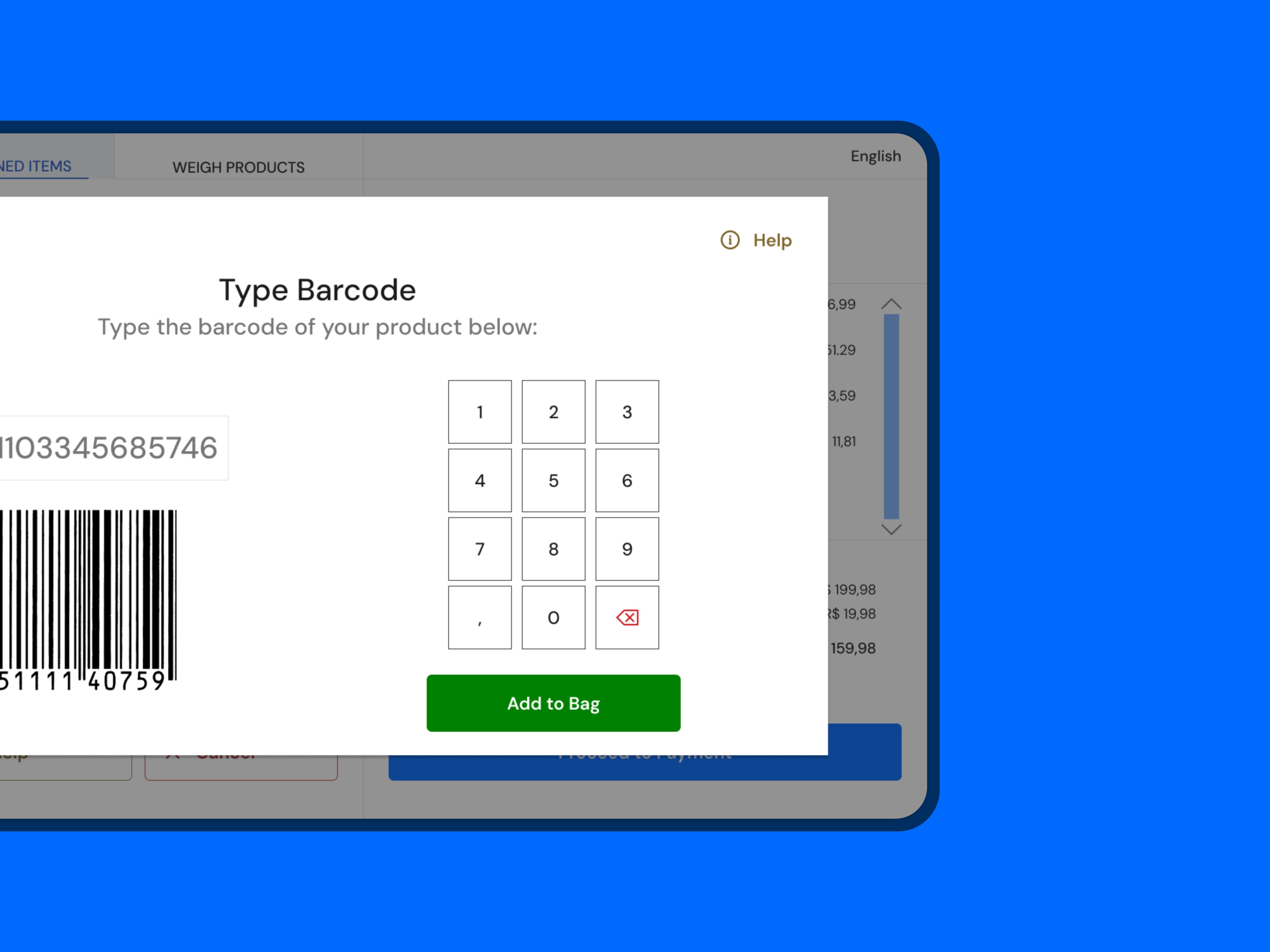
Typing barcode: simple and necessary option for when there are scanning problems.
Editing number of items: offering an autonomous error solution or a way to make buying multiple items faster.
Editing number of items: offering an autonomous error solution or a way to make buying multiple items faster.
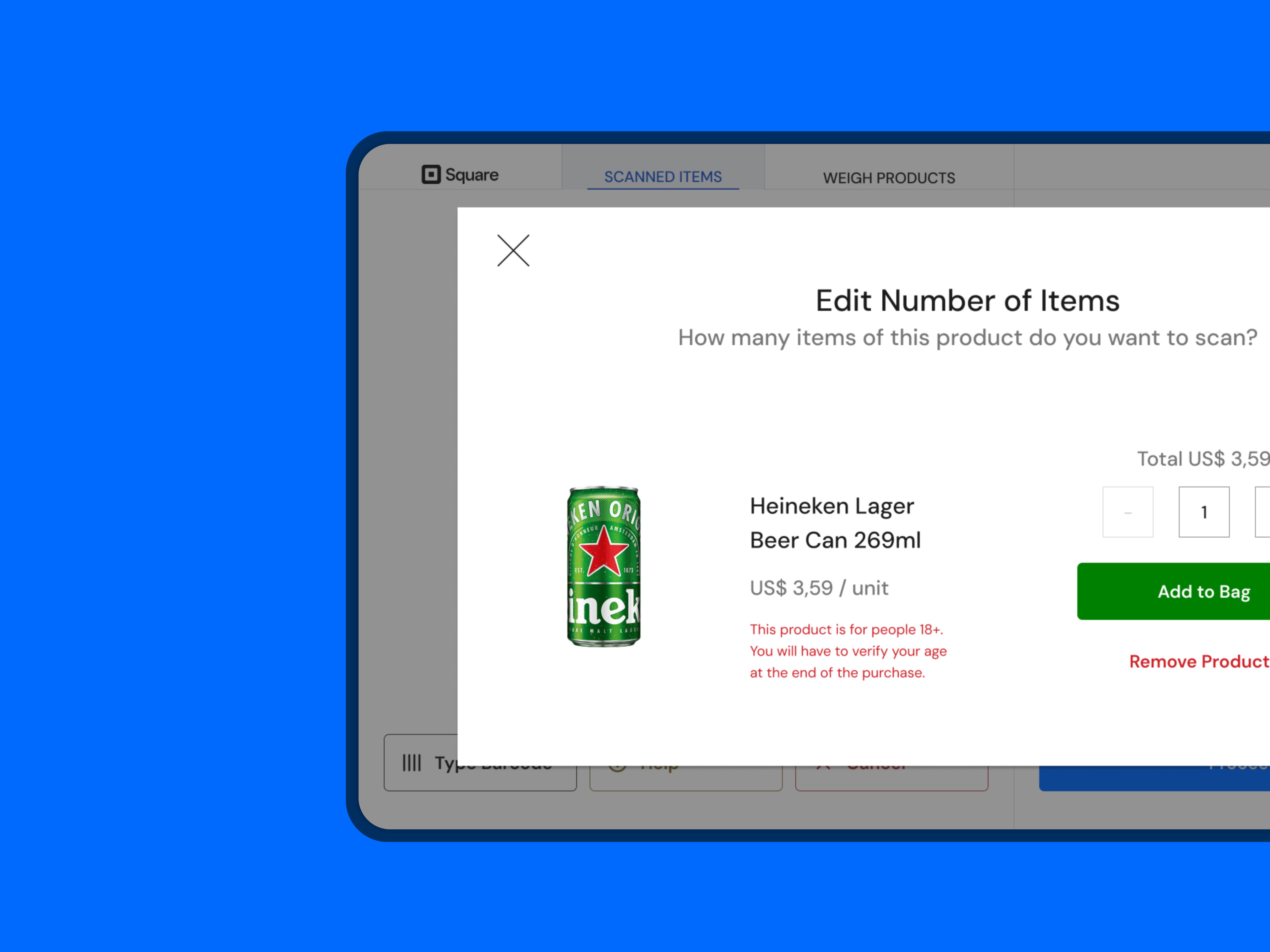
Editing number of items: offering an autonomous error solution or a way to make buying multiple items faster.
Buying products with age restriction: offering both an autonomous and assisted solution to buying age restricted products.
Buying products with age restriction: offering both an autonomous and assisted solution to buying age restricted products.
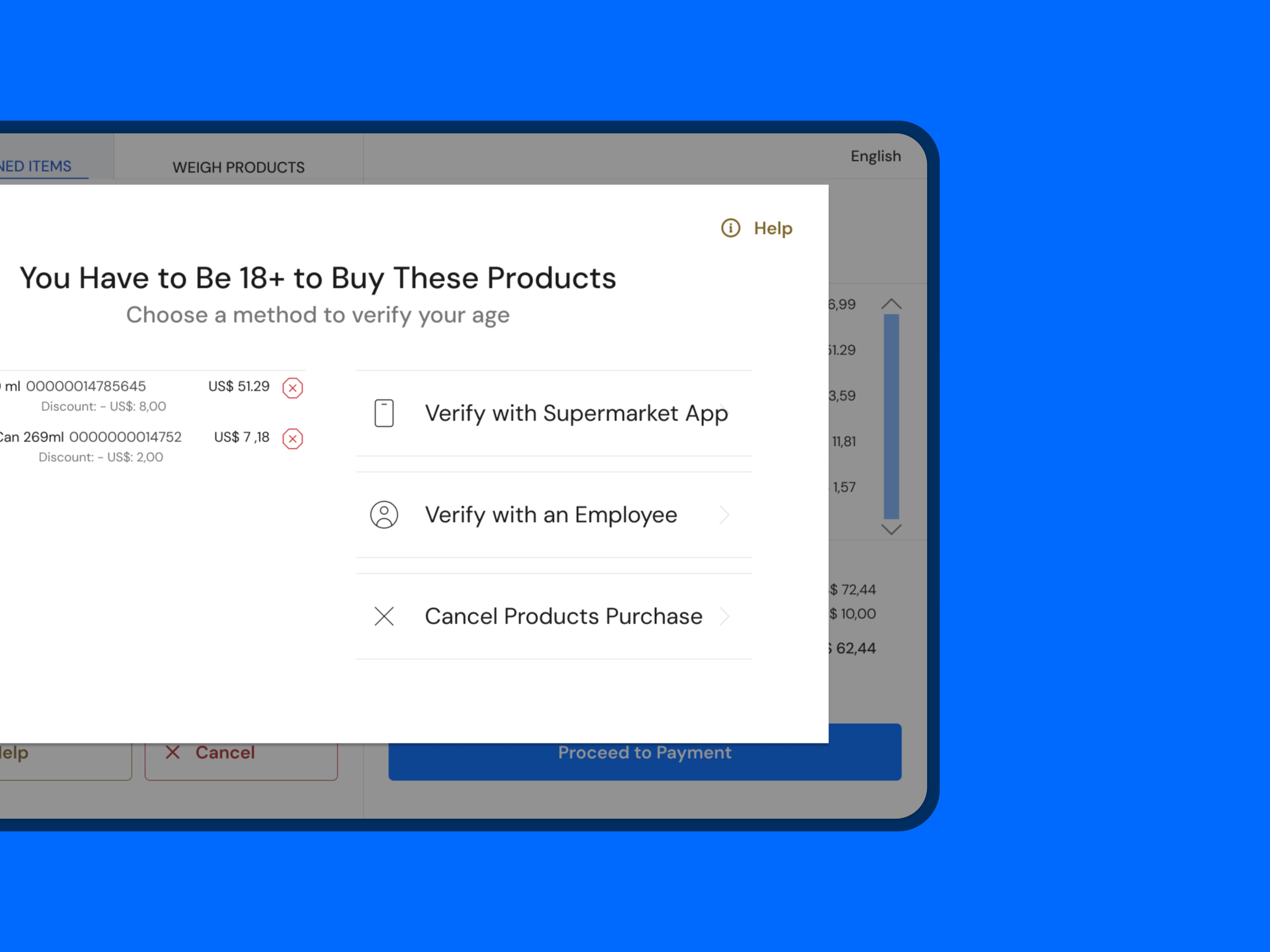
Buying products with age restriction: offering both an autonomous and assisted solution to buying age restricted products.
Solving problems: autonomous and assisted options for users to choose how they prefer to solve problems.
Solving problems: autonomous and assisted options for users to choose how they prefer to solve problems.
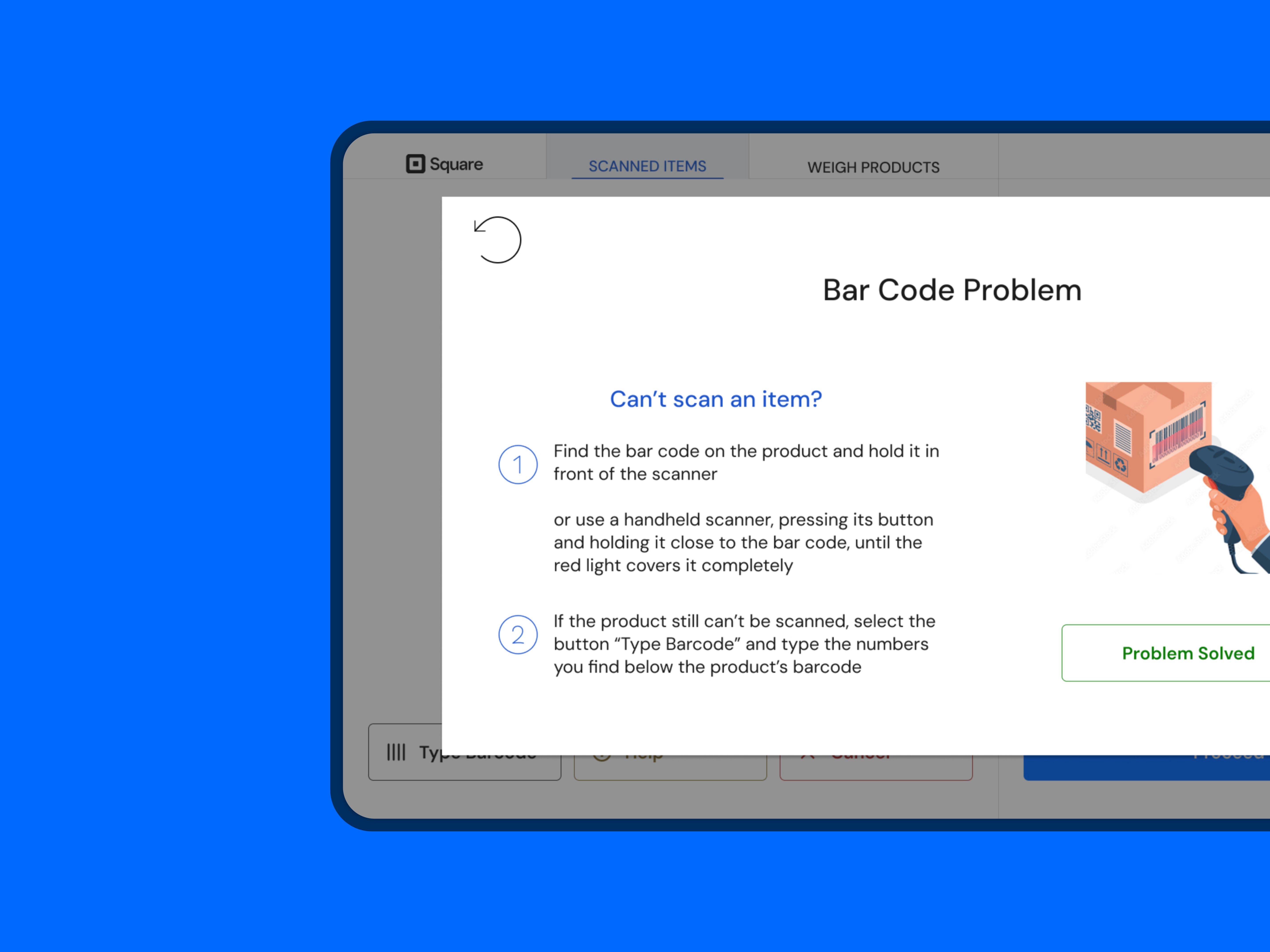
Solving problems: autonomous and assisted options for users to choose how they prefer to solve problems.
next steps
What happens now?
Tracking events
If the product was to be released, it would now be the time to start tracking some events to get some data, analyze how successful the product is and find spaces for improvement.
Improving the product
Not all features could be added to the product this time, but this is what backlogs are for! Here are some possible improvements that have already been noticed and would be my focus while the data for other changes was still being tracked with the events:
new “edit items” flow (users’ needs from Crazy 8’s)
instructions (onboarding) on first screen (accessibility)
summary of sale on screen during payment flow (not a user need from testing, but it’s better for transparency).
learnings
What did I learn with this project?
Think about metrics
For the survey and interview, I was so focused in understanding the problem in depth, that I didn’t think about what I wanted the results to do for me. Although I understood user’s pain points then, it wasn’t easy to make decisions.
Observing users is essential
I noticed some differences between what users said they did and what they actually did. Although both are important, observing users proved to be essential in making decision.
Curiosity makes progress
The best catalyst to the whole project was curiosity. When you get curious about the result instead of expecting a certain outcome, that’s when I could learn the most and evolve the product into a better solution.
In case you want to see my whole process, here is the link to my board on Miro, where I document everything about this project in details.